Guide
What is a hobo nickel?
A hobo nickel is a coin that has been carved by hand into a small sculpture. The carver shaves, pushes, and punches the metal until the original design becomes something new, most famously a new face in place of the profile on a U.S. Buffalo nickel. The result is a miniature bas-relief: a raised picture worked into the coin itself.
The name stuck because the art is tied to the hobos and itinerant workers of the early 20th century. Today "hobo nickel" is used loosely for many kinds of hand-altered coin art, on many denominations, and that includes the hand-cut pieces in the COMMANCOINS shop.
Where hobo nickels came from
The Buffalo nickel, 1913–1938
The U.S. Buffalo nickel (also called the Indian Head nickel) was struck from 1913 to 1938. Its front carried a large Native American profile that filled most of the coin, and the back showed a bison. That big, high-relief head gave carvers far more room to work than earlier coins did, and the nickel was cheap, common, and small enough to carry. It became the classic "host coin" for the art.
Carved by people on the move
Carvers began altering Buffalo nickels almost as soon as they entered circulation, and the practice grew through the 1920s and the Great Depression. Many carvers were travelling workers who rode freight trains looking for work. Their tools were simple: pocket knives, nails, awls, small hammers, and homemade punches.
A carved nickel could be traded for a meal, a ride, or a place to sleep. The most common subject was a bearded man in a derby hat, but carvers also made clowns, soldiers, women, friends, and self-portraits. The bison on the back was sometimes turned into a donkey, an elephant, a turtle, or a man carrying a pack.
Carved, not engraved
Collectors draw a line between carving and engraving. Engraving cuts lines into a surface. A hobo nickel is carved: metal is removed and moved little by little until the design stands in relief. Older coin alterations, such as the engraved "love tokens" of the late 1800s, came before the hobo nickel and are a separate tradition.
Hobo nickels today
The art never stopped. Carvers kept working through the mid-1900s as the Jefferson nickel replaced the Buffalo nickel, and modern artists still carve coins today, sometimes with power tools. Subjects widened too, from the old derby-hat portraits to skulls, fantasy figures, and pop culture.
Old hobo nickels by known carvers are collected seriously. Collectors usually care more about the quality of the carving than the date of the coin: deep carving, unusual subjects, and smooth fields are prized.
How hobo nickels relate to hand-cut coin jewelry
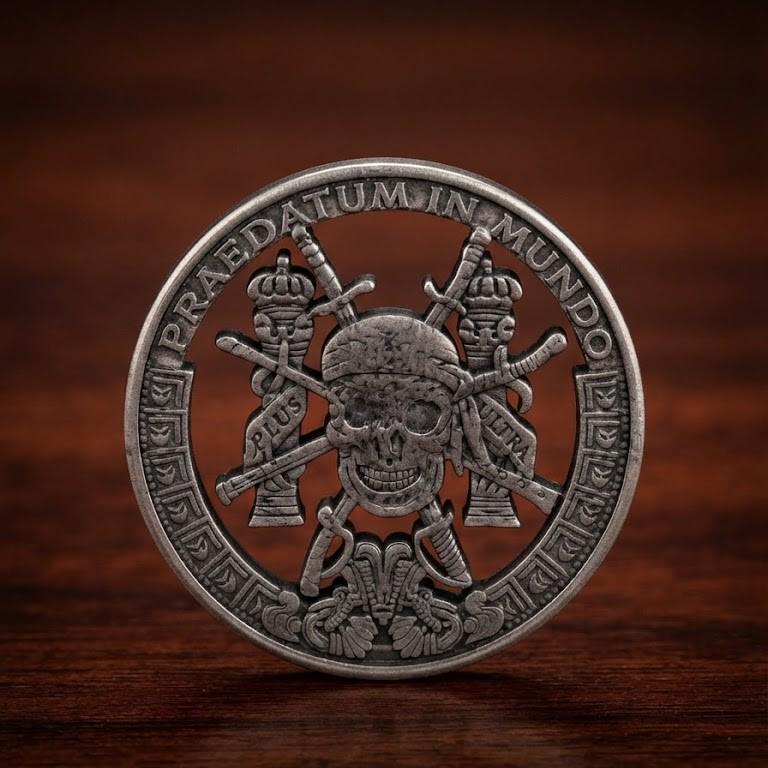
Hand-cut coin jewelry comes from the same idea: take a real coin and change it by hand into something personal. The difference is in the work. A classic hobo nickel is carved in relief on the face of the coin. A cut coin has parts of the design cut away by hand, so the figure stands out against open space, ready to wear or carry.
COMMANCOINS is a workshop for hand-cut custom coins. Each coin is cut by hand, with no machinery, and a case protector is included. Many listings carry "hobo nickel" or "hobo coin" in their names, which places them in that wider family of hand-made coin art. The listing title names the coin, and often its year, so you can see when a piece starts from a Buffalo nickel, a half dollar, a dollar, or a state quarter. How each coin is cut covers the workshop's process in its own words.
Hand-cut pieces in the shop
The catalog is arranged by how a piece is worn or carried:
- Hand-cut coins: pocket pieces and display coins, closest in spirit to a classic hobo nickel you keep in your pocket.
- Cut coin necklaces: cut coins worn as pendants.
- State quarter jewelry: pieces cut from U.S. state quarters.
- Cut coin earrings: many of them cut from state quarters.
- Cut coin keychains: hand-cut coins made to carry on keys.
- Mechanical moving coins: coins cut so part of the design can move.
Coins are one of a kind, so a finished piece can differ slightly from the photograph. The photograph, price, and processing time on each listing are the record for that piece.
Quick answers
Is a hobo nickel worth more than a regular nickel?
A carved coin is valued for the art, not its face value. Older pieces by known carvers can be valuable to collectors, while modern pieces are usually bought as art or jewelry.
Do hobo nickels have to be nickels?
No. The Buffalo nickel is the classic host coin, but the term is used for carved and altered coins of many denominations.
Is a hand-cut coin the same as a hobo nickel?
They are close relatives. A traditional hobo nickel is carved in relief; a cut coin has parts of the design cut away by hand. Both start from a real coin and are changed by hand.
Are COMMANCOINS pieces made by machine?
No. Each coin is cut by hand, with no machinery. More on the questions page.
Browse the shop, read how each coin is cut, or write the workshop at shop@commancoins.com.
Related guides: How to care for a cut coin necklace · Gift ideas for hand-cut coin jewelry